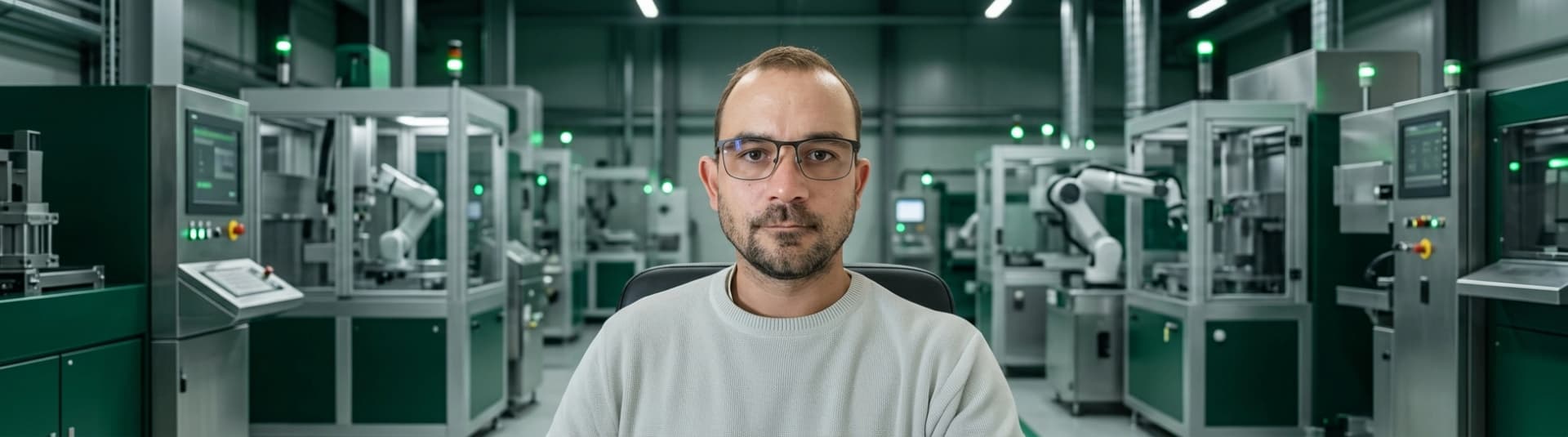
Interview with Alexandre VOVARD - Maintenance Manager
By Adil Mokhles · CEO EcoSpare · 2 min · 28 August 2026
Topic (single — in the URL)
Tags (several — outside the URL)
Question 1: Could you introduce yourself and tell us about your company?
A2C Préfa is a major player in the production of structural concrete elements in the Île-de-France region.
My name is VOVARD Alexandre, and I am the Maintenance and New Works Manager at the production site of Sivry-Courtry
Question 2: What is the main value you bring to the market?
We provide quick solutions for the construction of all types of buildings, while aligning with a sustainable and decarbonized future through the design of new products that combine bio-based materials and low carbon cement.
Question 3: What obstacles do you encounter in your profession?
Mastering profitability, meeting increasingly short deadlines from our clients, and environmental challenges.
Question 4: What measures could be used to anticipate the obsolescence of industrial equipment and combat its effects?
Conduct internal audits on the different families of parts such as drives, controllers, and get in touch with manufacturers to know the end-of-life dates for the listed products.
Question 5: What do you think about predictive maintenance?
I believe that all types of maintenance should be used on a large industrial site to reduce downtime; predictive maintenance should indeed be implemented whenever possible.
Question 6: What advice would you give your peers for effective management of their installed base?
To implement a well-defined CMMS according to the site's needs and to raise user awareness about the importance of rigor in using this tool, which is the only long-term means of capitalizing on information and tracking machines through the creation of preventive maintenance plans.
Question 7: How do you integrate the circular economy for better maintenance of your equipment?
As of today, on our site, operations registered in a circular economy approach related to maintenance include the sorting of metal waste for recovery, and repairing, if possible, electronic components such as circuit boards or frequency converters, for example.